The Cellist: Reimagining Disability and Self-Discovery through Music
“Music developed me to be human. It taught me how to communicate with people.”

LivAbility Now is a digital disability lifestyle publication. If you like what we do, please subscribe, donate or share our work!
Written by Karam Gafsi for LivAbility Magazine
The cello is the instrument of choice for Alexander “Sasha” Konstantinov.
As I entered his Tempe apartment for the first time, it was already apparent that music had been a major passion that has followed him in his 41 years. Shelves filled to the brim with an assortment of vinyl records decorated the main room.
The neatly polished cello he had with him was quite large, demanding exceptional form and sitting posture. I had asked him to play for me. Methodically, he placed the cello on its stand and enveloped his arms around it.
Sasha then began to work the strings of the instrument with his bow. These were swift, confident blows—he kind I assume can only come with years of mastery. Meanwhile, his fingers skillfully danced upon the neck of the cello.
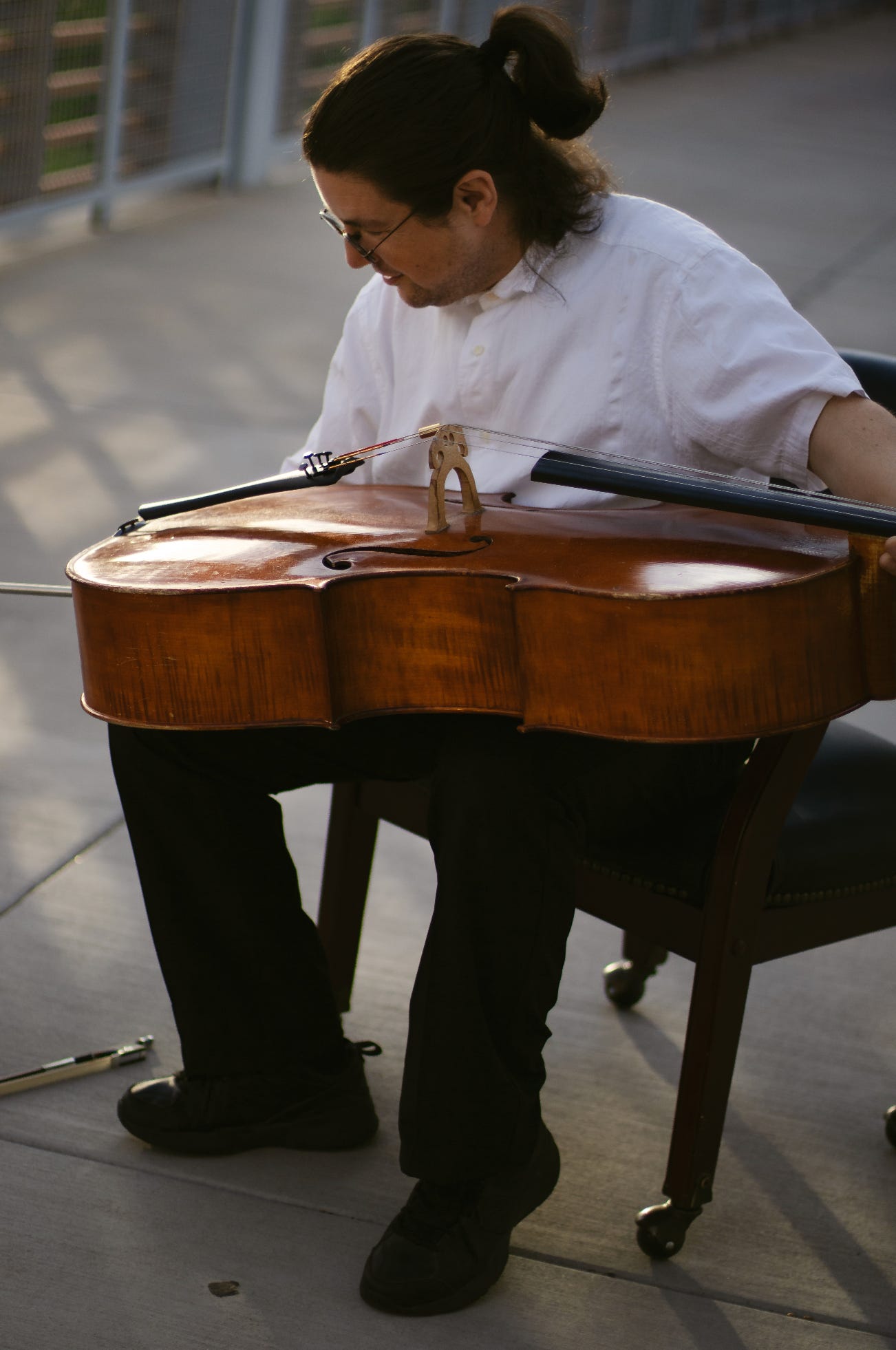
Just as Sasha drew the bow along the strings, the sound of Mozart began to filter throughout his apartment. This performance was graceful yet very physical, with Sasha decisively slashing at the instrument. At a cursory glance, it could perhaps appear effortless; however, Sasha seemed to clearly be entranced in a mode of indomitable focus.
Whenever his eyes weren’t closed, they were fixated on the attack of his bow and the angle at which it met the strings. Not once did I see him take a peek at the intense fingerwork of chords his other hand was performing.
This bombastic display of coordination and motor functioning should be impossible for Sasha according to the diagnoses he received from doctors at a young age.
Tatiana Konstantinov, Sasha’s mother, was told that her son would never be able to walk. Sasha had muscle weaknesses, and received diagnoses of cerebral palsy and visual impairment.
Much of Sasha’s early childhood involved helping him develop and work through these diagnoses. It later became apparent that certain aspects of his disabilities wouldn’t be as severe as the doctors initially described.
“The doctors said he wouldn’t be able to walk, but when he started walking, we couldn’t stop him,” said Tatiana. “He would always run around!”
While they worked through physical therapy and exercises, Tatiana said it was ultimately the cello and Sasha’s passion for music that helped him overcome his muscle impairments.
At a very early age, Sasha was driven by a desire for “pure sound.” Tatiana recalled that they discovered this passion for music when Sasha had started playing Mozart on the piano by his bedside.
“Without music I don’t think he would be the person he is now,” said Tatiana. “It gives him some kind of stability–playing the same piece over and over and perfecting it.”
According to Tatiana, this drive for repetition and perfected sound is a product of Sasha’s autism, and served as a major strength in developing his skills as a musician.
“We told Sasha there are certain things people can do that you cannot,” said Tatiana. “But we also told him, there are things you can do that other people can’t. Music can be your purpose in life.”
Sasha recalls as a kid that he had difficulty with tasks such as drawing a straight line, but through becoming involved with music and learning instruments, he was able to develop his motor skills.
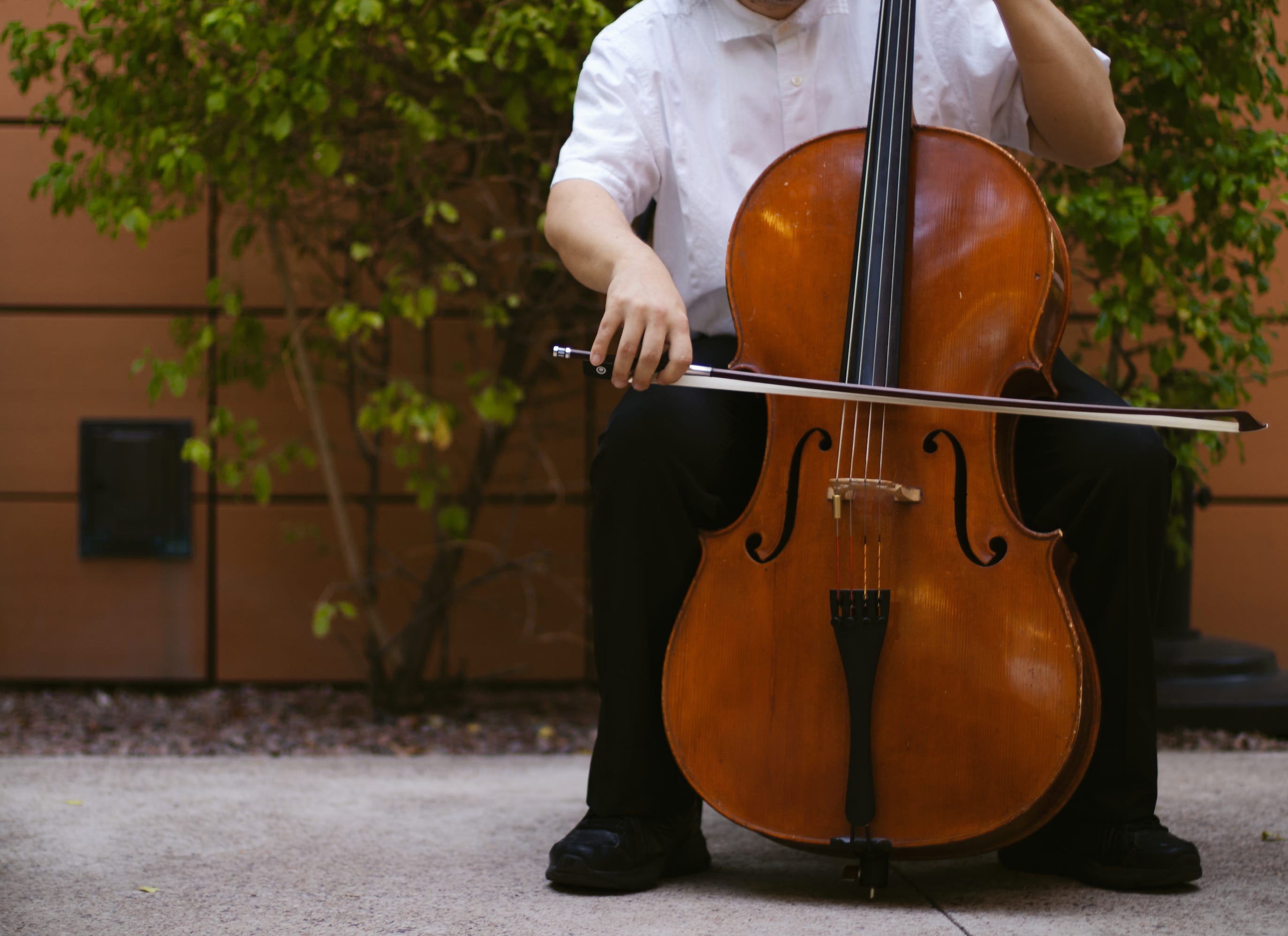
“With music, it’s a whole other world,” said Sasha. “Music developed me to be human. It taught me how to communicate with people.”
This musical talent allowed Sasha to play in a variety of orchestras and concerts over the years, as well as frequently playing his cello for retirement homes.
While looking for work, Sasha eventually found volunteering opportunities at Ability360. Tatiana recalls that while Sasha was initially very nervous during his first visit, he would quickly settle into what she described as a welcoming environment that was understanding of Sasha’s disabilities.
“Music developed me to be human. It taught me how to communicate with people.”
Through his volunteer work, Sasha became more involved with Ability360 and even began bringing his cello to perform music for groups and events.
In addition, Sasha became involved with Ability360’s Community Living Options Men’s Group. This group consists of men dealing with cognitive or developmental disabilities and is meant to improve their socialization and independent living skills. It is here where Sasha has begun to take on a bit of a mentor role according to Douglas West, the Community Living Options coordinator.
“He’s become a role model for the guys in the group who may be nervous about trying new things,” said West. “They can see that success–what’s he done with his music–and it becomes motivating.”
“Ability360 taught me to be human,” said Sasha. “It let me figure out who I am.”